Global Scientific Excellence Converges in Dubrovnik as ISABS and AAFS Deepen a Landmark Partnership
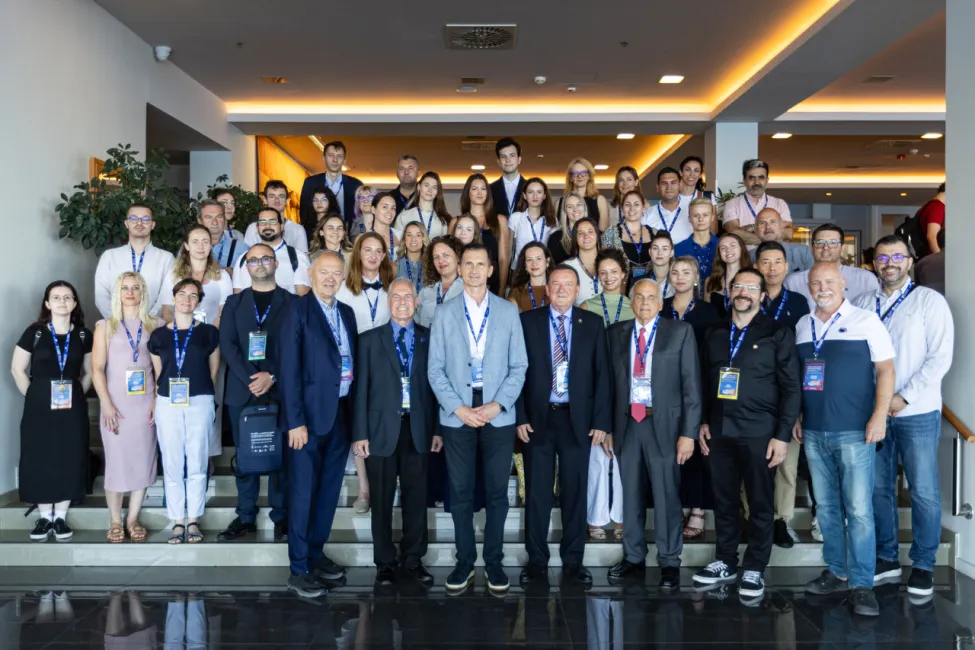
The 4th ISABS Conference, Advances in the Application of Artificial Intelligence in Precision Medicine, held in Dubrovnik, Croatia, June 15 to 19, 2026, represented one of the world's most distinguished interdisciplinary scientific gatherings. Bringing together leading experts in forensic science, precision medicine, genomics, regenerative medicine, and artificial intelligence, the conference provided a unique forum where groundbreaking scientific discoveries were translated into innovative solutions aimed at improving human health and advancing the pursuit of justice.
The conference was organized by the International Society for Applied Biological Sciences (ISABS), Mayo Clinic, St. Catherine Specialty Hospital, and the International Center for Applied Biological Research, in partnership with the American Academy of Forensic Sciences (AAFS). This exceptional collaboration united some of the most respected scientific and medical institutions in the world, creating an environment that fostered innovation, interdisciplinary dialog, and transformative research partnerships.
Over the years, the strategic partnership between ISABS and AAFS has become a hallmark of the conference's international success. It has enabled the exchange of cutting-edge knowledge among eminent scientists, physicians, forensic experts, and policymakers from across the globe. Through this collaboration, the conference has strengthened ties between academic institutions, health care organizations, forensic laboratories, industry leaders, and government agencies, accelerating the translation of scientific discoveries into real-world applications.
With its unparalleled ability to connect world-renowned experts across diverse disciplines, the ISABS Conference has established itself as a global catalyst for scientific excellence, advancing the frontiers of forensic science, precision medicine, and artificial intelligence, while inspiring the next generation of researchers and innovators.
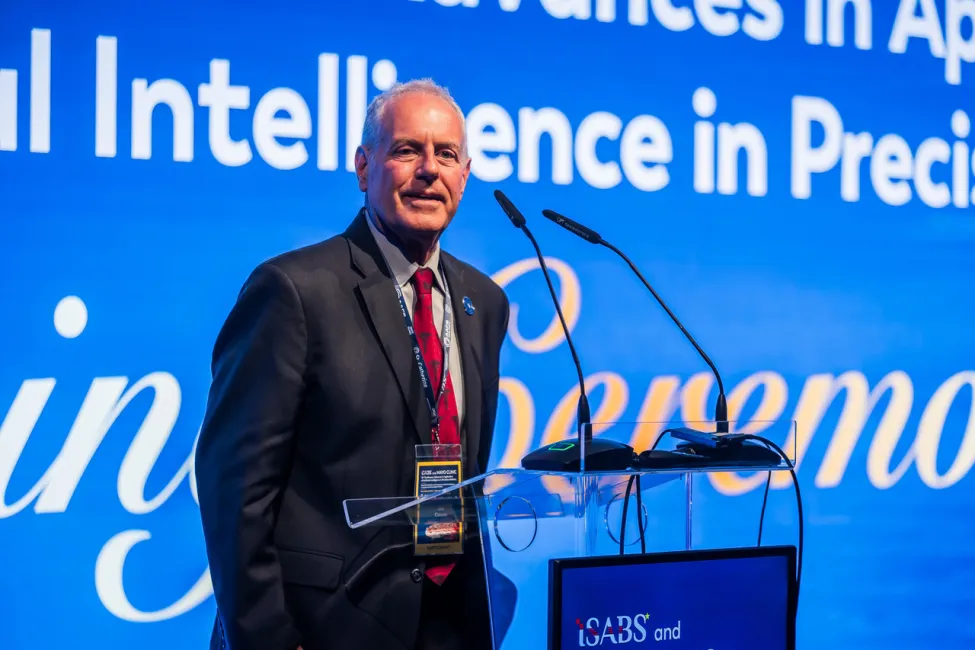
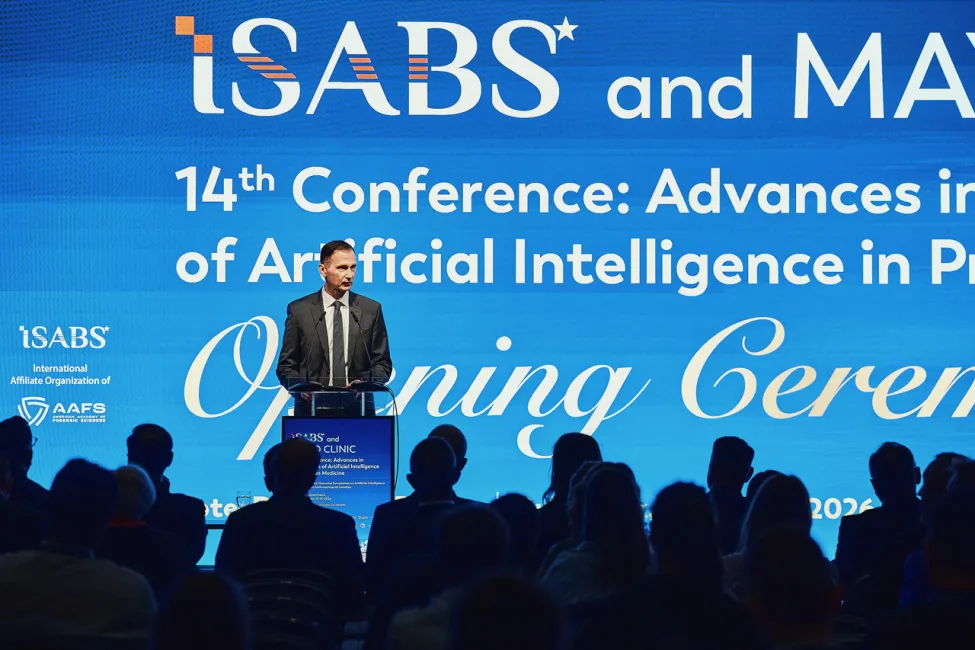
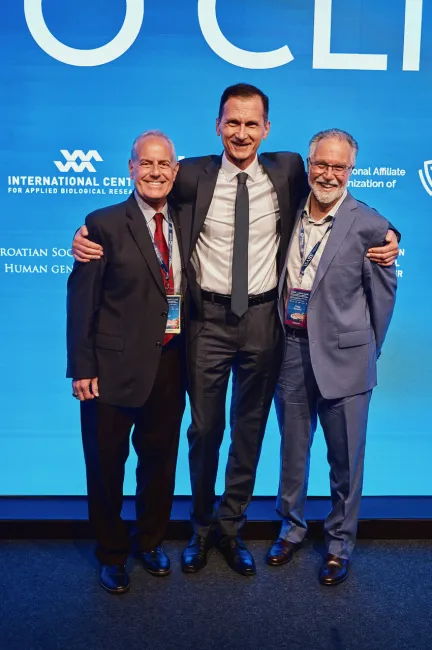
The presence of AAFS presidents at ISABS conferences has become a long-standing tradition, reflecting the exceptional partnership between AAFS and ISABS and the conference's prominent position within the global scientific community. This tradition continued in 2026 with the participation of AAFS President James Caruso, MD, whose attendance further highlighted the international significance and scientific prestige of the Dubrovnik meeting.
Together with ISABS President Professor Dragan Primorac, MD, PhD, Dr. Caruso underscored the shared commitment of both organizations to advancing forensic science, precision medicine, and interdisciplinary scientific collaboration. Prof. Primorac's longstanding leadership and vision have been instrumental in establishing ISABS as one of the world's leading platforms for the exchange of knowledge in forensic science, anthropology, personalized medicine, and artificial intelligence in medicine.
Dr. Caruso's unwavering commitment to scientific excellence, education, and international collaboration embodies the shared mission of AAFS and ISABS to advance research, innovation, and professional development for the benefit of society. Their joint presence in Dubrovnik further strengthened the enduring partnership between AAFS and ISABS and reaffirmed their common dedication to promoting scientific progress and global cooperation.
The conference attracted nearly 600 participants from across the world, including leading researchers, physicians, forensic scientists, geneticists, bioinformaticians, and policymakers. Particularly noteworthy was the participation of Nobel Prize laureates, whose presence elevated both the scientific impact and global visibility of the meeting. By bringing together internationally recognized leaders from diverse disciplines, the ISABS Conference provides an unparalleled platform for the exchange of ideas, the creation of transformative collaborations, and the translation of scientific discoveries into real-world advances in health care and forensic science. As a result, the conference continues to play a pivotal role in shaping the future of precision medicine, artificial intelligence, genomics, and forensic sciences while inspiring the next generation of scientific leaders.
Nobel Spirit: Nobel Laureate Prof. Gregg Semenza, AAFS President Dr. James Caruso, and ISABS President Prof. Dragan Primorac Inspire the Next Generation of Scientific Leaders
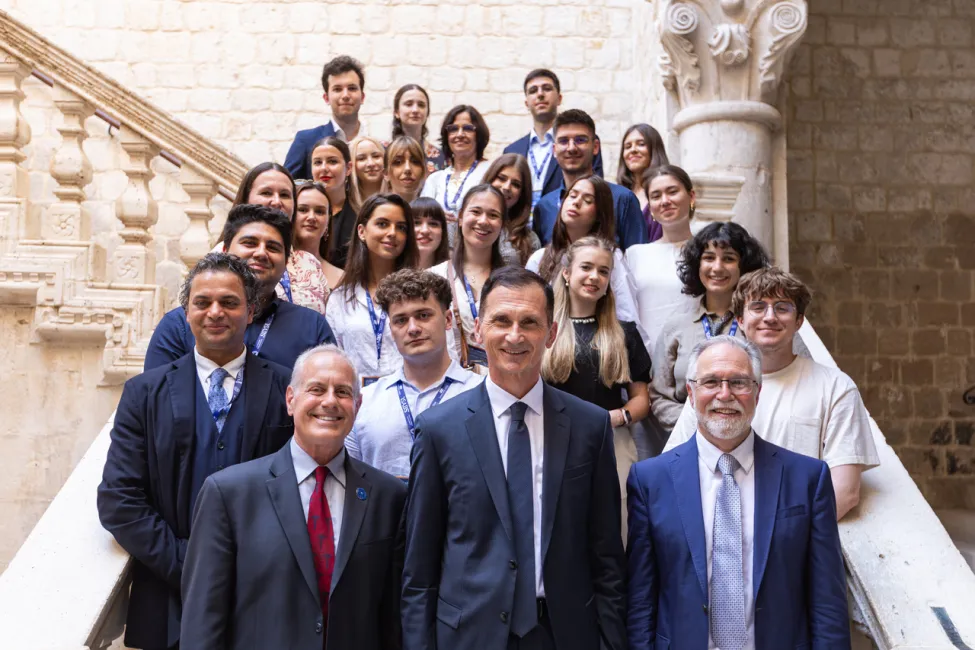
A special highlight of this year's conference was the "Nobel Spirit" session, one of the most inspiring and anticipated events of the meeting. During this unique forum, Nobel Prize laureate Prof. Gregg L. Semenza, AAFS President Dr. James Caruso, and ISABS President Prof. Dragan Primorac engaged in a dynamic dialog with some of the most outstanding students attending the conference. In an open and interactive discussion, they shared personal stories from their scientific journeys, reflected on the values of curiosity, perseverance, innovation, and leadership, and answered numerous questions from aspiring young researchers.
The session offered a rare opportunity for students to interact directly with globally recognized leaders in science, medicine, and forensic sciences, embodying ISABS's longstanding commitment to education, mentorship, and the development of future generations of innovators. By creating a platform where distinguished scientists and young talents can exchange ideas, the ISABS Conference continues to inspire excellence, encourage critical thinking, and foster the scientific leaders of tomorrow.
The significance of the session extended far beyond the conference hall. The "Nobel Spirit" discussion was broadcast live on Croatian national television, bringing the voices and experiences of world-renowned scientists to a broader audience and promoting the values of science, education, and discovery.
Since its inception, the "Nobel Spirit" initiative has welcomed an extraordinary group of Nobel Prize laureates, including Sir Prof. Richard J. Roberts, Prof. Aaron Ciechanover, Prof. Avram Hershko, Prof. Robert Huber, Prof. Paul Modrich, Prof. Ada Yonath, Prof. Thomas Südhof, Prof. Gregg Semenza, Prof. Svante Pääbo, and Prof. Harald zur Hausen. Their participation has transformed the session into a hallmark of the ISABS Conference, providing students and young investigators with unparalleled access to some of the greatest scientific minds of our time.
More than a discussion, "Nobel Spirit" represents a celebration of knowledge, inspiration, and human achievement, reinforcing the mission of ISABS to connect established scientific leaders with future generations who will shape the future of medicine, forensic science, genomics, and artificial intelligence.
The 1996 Crash of U.S. Commerce Secretary Ron Brown's Aircraft in Croatia: Forensic Investigation, Identification, and Legacy
During the 14th ISABS Conference, a special joint event was organized to commemorate the 30th Anniversary of the tragic aircraft crash that claimed the life of U.S. Secretary of Commerce Ron Brown and 34 others. The event was jointly organized by ISABS, the Ministry of the Interior, the American Academy of Forensic Sciences (AAFS), and the University of Split, Faculty of Forensic Sciences, as part of the Crime Scene Investigation Training Course entitled The 1996 Crash of U.S. Commerce Secretary Ron Brown's Aircraft in Croatia: Forensic Investigation, Identification, and Legacy.
The session was chaired by AAFS President Dr. James Caruso, Prof. Dragan Primorac, Prof. Šimun Anđelinović, bringing together experts in forensic science, disaster victim identification, and medicolegal investigations to reflect on one of the most significant international forensic operations of the 1990s.
The opening forensic presentation was delivered by Dr. Ivan Jerković and was jointly prepared with Dr. Željana Bašić from the Faculty of Forensic Sciences, University of Split. The presentation provided a comprehensive reconstruction of the crash-site investigation, recovery efforts, and victim identification process, highlighting the close collaboration among Croatian institutions, United States authorities, and IFOR/NATO personnel. Particular emphasis was placed on the forensic methodologies employed, the challenges encountered during the recovery operation, and the importance of international cooperation in responding to mass fatality incidents.
Additional keynote presentations were delivered by Dr. Ira Titunik and Prof. Šimun Anđelinović, who offered personal, historical, medical, and forensic perspectives on the tragedy and its lasting impact. Their presentations provided valuable insights into the human, scientific, and diplomatic dimensions of the event, underscoring the enduring legacy of the investigation and its contribution to the advancement of forensic science and disaster victim identification practices worldwide.
A compelling historical perspective was added by Dr. Vinko Bubić, who presented rare archival footage from the period, including recordings documenting the bombardment of Dubrovnik during the Homeland War. These powerful images placed Secretary Ron Brown's mission within the broader context of a nation emerging from conflict and rebuilding its future. They served as a poignant reminder that the American delegation's visit to Croatia in 1996 was far more than a routine diplomatic engagement. It was a mission dedicated to supporting peace, democratic transition, post-war reconstruction, economic recovery, and the strengthening of ties between Croatia and the United States. By illuminating the historical circumstances surrounding the visit, Dr. Bubić underscored the profound significance of Secretary Brown's commitment to fostering stability and international cooperation at a pivotal moment in Croatia's modern history.
The event was further contextualized by the research article Three Decades After the CT-43 Airplane Crash Near Dubrovnik in 1996: Forensic Reconstruction, Diplomatic Memory, and Croatian–American Collaboration, published in ST-OPEN in 2026, available here. Drawing on official aviation investigation reports, Croatian police and forensic documentation, United States governmental and congressional materials, contemporary records, and commemorative sources, the article reconstructs the search, recovery, forensic examination, and identification efforts following the disaster. It also highlights the professionalism of Croatian police, military, emergency, medical, and forensic services and the close cooperation established with United States and IFOR/NATO authorities.
As a symbolic connection between historical remembrance and contemporary technology, participants received a specially designed commemorative keychain bearing the image of Ronald H. Brown. Each keychain contained an embedded NFC chip through which users to the scientific paper dedicated to the crash, the forensic investigation, and the enduring legacy of Secretary Brown's mission. The commemorative object thus served not only as a conference keepsake, but also as an interactive digital memorial linking the participants directly to the documented history of the event.
Following the presentations and archival materials, the discussion was opened to participants. In this way, the joint event extended beyond the technical reconstruction of a major aviation disaster. It became an act of scientific remembrance, historical documentation, and gratitude, as well as a tribute to the 35 individuals who lost their lives while participating in a mission of international cooperation and post-war recovery.
Names In Silence: A Croatian-American Forensic Partnership That Restored Identity to Victims of War
AAFS President Dr. Caruso attended the promotion of the monograph Names in Silence, presented to all participants of the ISABS Conference. The publication chronicles one of the earliest systematic applications of DNA technology in the identification of victims recovered from mass graves during and after the Croatian Homeland War. Published by the University Hospital of Split, the monograph documents not only a landmark scientific achievement but also an extraordinary chapter in the shared history of Croatian and American forensic science. Simultaneously, 30 years after its original release, the documentary film Heroes of Hope, first broadcast by Connecticut's WTNH News 8 in 1994, was presented to conference participants. The screening commemorated a landmark moment in the history of humanitarian forensic science and highlighted the early efforts that contributed to the identification of victims of war through the application of DNA technology and forensic medicine.
The monograph includes the pioneering article Identification of War Victims from Mass Graves in Croatia, Bosnia and Herzegovina by the Use of Standard Forensic Methods and DNA Testing (Journal of Forensic Sciences, 1996; 41(5): 891-894), authored by Dragan Primorac, Šimun Anđelinović, Marija Definis Gojanović, Irena Drmić, Boja Režić, Michael Baden, Mitchell Kennedy, Moses Schanfield, Stephen Skakel, and Henry Lee. Published nearly 30 years ago, this paper is widely recognized as one of the first scientific reports describing the large-scale application of DNA technology for the identification of victims recovered from mass graves. It marked a turning point in forensic science, demonstrating how DNA analysis could be integrated with conventional forensic methods to identify victims of armed conflict and humanitarian disasters. The monograph is freely available at: Names in the Silence.
The connection with the American Academy of Forensic Sciences was established at a decisive moment in the development of the Croatian identification program in 1995 during the AAFS presidency of Haskell Pitluck. In February 1996, Primorac and Anđelinović participated in the 48th Annual Conference of the American Academy of Forensic Sciences in Nashville, TN. Before an international professional community gathered at a meeting attended by more than 2,500 participants, they presented the results of the identification of victims recovered from mass graves in Croatia and Bosnia and Herzegovina. This appearance in Nashville was more than a conference presentation. It brought the reality of the Croatian mass graves, the suffering of missing persons' families, and the emerging Croatian experience in DNA-assisted identification directly before one of the world's most important forensic science communities. For Croatian scientists working in the immediate aftermath of war, the AAFS conference provided international professional recognition and an opportunity to demonstrate that advanced forensic methods could be successfully applied even under the most demanding post-conflict conditions. For the wider forensic community, the Croatian experience offered early evidence of the transformative potential of DNA technology in the identification of large numbers of unknown and severely degraded remains.
The book was created as a tribute to the victims, their families, and the scientists who understood that the recovery of human remains was only the beginning of their responsibility. The ultimate mission was to restore each victim's identity, return the remains to the family, and replace years of uncertainty with scientifically established truth.
During the early 1990s, Croatian forensic professionals were working under extraordinarily difficult wartime and postwar conditions. Human remains recovered from mass graves were frequently decomposed, damaged, incomplete, or no longer identifiable using conventional approaches alone. Medical and dental records were often unavailable, while families of missing persons had spent years without reliable information about the fate of their loved ones. Faced with these challenges, the team at the University Hospital of Split began combining established forensic methods with the emerging possibilities of DNA analysis. This work developed into a Croatian model of multidisciplinary identification in which forensic medicine, pathology, anthropology, odontology, genetics, radiology, and detailed antemortem investigation were brought together in the service of a single goal: giving the victims back their names.
From its earliest stages, this mission was strengthened by close cooperation with the United States and with leading figures of the American forensic community. The Croatian team led by Prof. Primorac worked with distinguished American experts, including Henry Lee, Michael Baden, Bruce Budowle, Moses Schanfield, Barbara Wolf, Mitchell Kennedy, Mitchell Holland, and other scientists whose expertise helped advance the application of forensic genetics to the identification of highly degraded human remains. The collaboration included the exchange of scientific knowledge, professional training, laboratory experience, technology, and essential material support.
The book Names in Silence brings this history together through archival records, scientific publications, photographs, institutional documents, and the testimonies of the people who participated in the identification process. The book's editors, Šimun Anđelinović, Željana Bašić, Ivan Jerković, Ivana Kružić, and Dragan Primorac, have preserved both the scientific record and the human memory of this work.
Its title reflects the deepest meaning of the identification mission. The victims could no longer speak. Many had been buried without names, concealed in mass graves, or reduced to incomplete skeletal remains. Yet their bodies retained evidence, and science provided a way for that evidence to be heard. Through forensic examination and DNA analysis, silence was transformed into identity.
A Nearly Decade-Long Strategic Partnership Between ISABS and AAFS
On February 15, 2017, at the AAFS Annual Scientific Conference in New Orleans, LA, the ISABS, led by Prof. Dragan Primorac, MD, PhD, achieved a historic milestone. Following a proposal by then AAFS President John Gerns and after several years of thorough evaluation, the AAFS Board of Directors unanimously voted to grant ISABS Association Academy status (now known as International Affiliate Organization status).
This prestigious recognition represented a powerful endorsement of ISABS's scientific excellence, international reputation, and longstanding contributions to forensic science, molecular medicine, and interdisciplinary research. Its importance is underscored by the fact that, in more than seven decades of the Academy's history, International Affiliate Organization status had been awarded to only three organizations worldwide.
By virtue of this unanimous decision, ISABS joined an exceptionally exclusive group of institutions recognized by the world's leading professional organization in forensic science. The distinction not only affirmed ISABS's global standing and scientific impact, but also recognized its pioneering role in advancing research, education, and international collaboration across multiple scientific disciplines.
ISABS History
The International Society for Applied Biological Sciences (ISABS) was founded in Washington, DC, in 1996 by Prof. Dragan Primorac and Prof. Moses Schanfield (George Washington University), while Prof. Stanimir Vuk-Pavlović (Mayo Clinic) joined them later.
Since its inception, ISABS has brought together over 900 distinguished invited speakers and more than 7,000 participants from over 80 countries, earning recognition as one of the world's leading platforms for scientific exchange and innovation.
During this year's conference, more than 550 distinguished scientists and clinicians from leading institutions worldwide attended, including the University of Pittsburgh Medical Center (UPMC), Dartmouth School of Medicine, Johns Hopkins University, Harvard Medical School, Mayo Clinic, MIT, Penn State University, University of San Francisco, University of North Texas, National Institutes of Health, Stanford University, Erasmus MC University Medical Center, University of New Haven, Children's Hospital Oakland Research Institute, and the Max Planck Institute.
This year's theme explored the transformative impact of artificial intelligence on biomedical research, diagnostics, and personalized healthcare.
The views and opinions expressed in the articles contained in the Academy News are those of the identified authors and do not necessarily reflect the official policy or position of the Academy.