President’s Spotlight—July 2026
There is a popular folk-rock song by Dave Loggins (the less famous cousin of pop singer Kenny Loggins) that begins "Please come to Boston," with the song continuing to "Please come to Denver," and finishing with "Please come to L.A." Here is my request for all of you: PLEASE COME TO ORLANDO! I will refrain from singing even though my last name might indicate that I have some talent in that area (older readers and my Italian colleagues will get this). Unfortunately, it seemed to have skipped a generation.
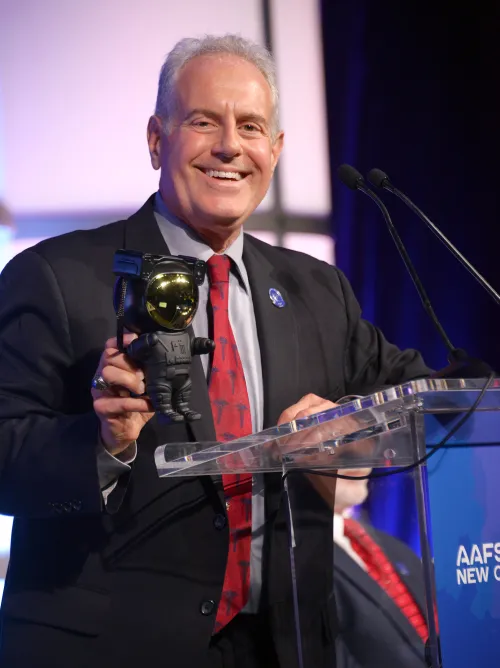
Following the tremendous success of the New Orleans conference, the 2026-27 Program Committee is hard at work developing a schedule of events, workshops, and presentations that will have everyone putting February 15-20 on their calendars. It is hard to believe that it is nearly six months from now. Look for registration to open September 22!
I would be remiss in my duties if I did not mention the all-important abstract submission deadline — August 1, 2026 — which is quickly approaching. That seems to sneak up on me every year and I am sure it feels the same for those of you who are routine contributors to the scientific presentations. I am encouraged to hear from many in the Academy that they have already submitted abstracts, with several related to the theme.
Speaking of the meeting theme, just a reminder it is: AROUND THE WORLD AND BEYOND.
We want to celebrate our international colleagues and emphasize that science has no boundaries while also focusing on some of the unique ways the forensic sciences apply to space travel and potential colonization. There is no better place to talk about space travel than 50 miles from Cape Canaveral. I encourage all of you to contribute to what I expect to be a phenomenal program. If your schedule allows, you should tour the Kennedy Space Center at Cape Canaveral, though for some perhaps a visit to Disney World might have to be on the agenda.
As the abstract submission deadline rapidly approaches, so too are the deadlines for obtaining the best rates for airfare and lodging. Our 2027 AAFS Annual Scientific Conference will be held at same location as our 75th Anniversary Annual Scientific Conference (2023) — the Rosen Shingle Creek. The venue has the advantage of being all under one roof. While I will concede that attendees will get their steps in, the walks will be indoors. Click here to secure your room today.
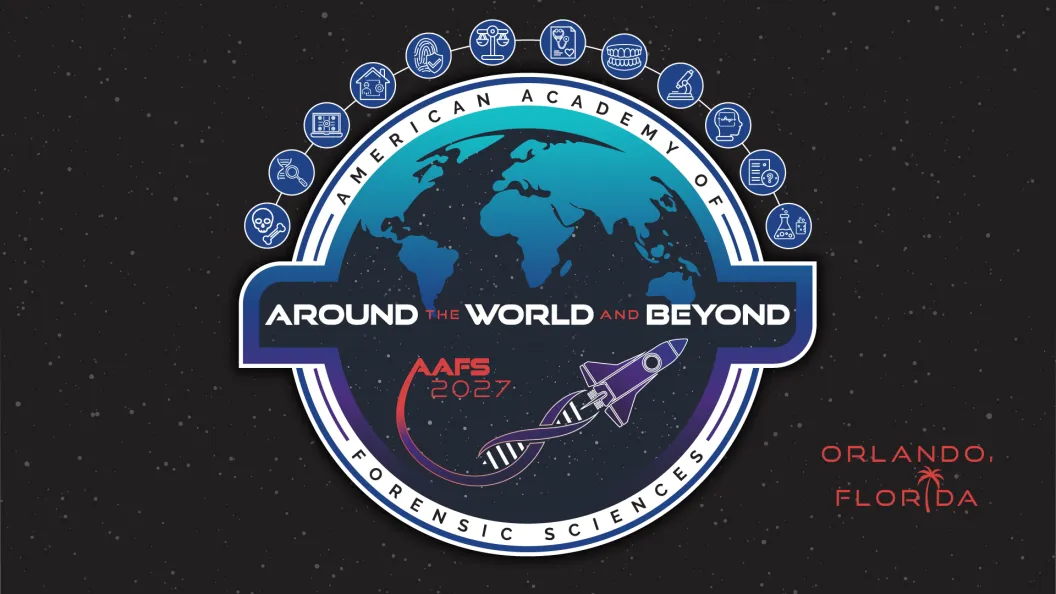
I have to give a big shout out of thanks to AAFS Digital Marketing Specialist Jase Hamstad for designing the official 2027 conference logo. In continuing with the tradition established last year, each of our sections is represented around the periphery of the logo. Jase expertly captured both components of the theme, and I am looking forward to seeing it used on conference material, displays at the meeting, and my personal favorite — going back to my military roots — a challenge coin.
In addition to the theme-based Plenary Session, I would like to point out a few highlights that are planned for the conference:
The strength of the Academy and what makes our conference stand out is that the expertise possessed by the members of all of our sections is brought together to allow us to learn from each other. For me, it parallels a day at the office because in order to do my job well, I rely on the fact that experts from every section of the Academy are available to help me. They are all committed to doing their jobs well.
To that end, there are five sections scheduling collaborative scientific sessions:
- Criminalistics and Toxicology
- Pathology/Biology and Toxicology
- Forensic Nursing Science and Jurisprudence
There is still time to help with the FSF Workshop and Interdisciplinary Symposium. Click on the links below for more information and to see how you can contribute.
FSF Workshop — Call for Speakers
Interdisciplinary Symposium
The Forensic Sciences Foundation provides scholarships and grants that allow emerging leaders in our disciplines to complete and present their research. Please consider donating to the FSF and support the Silent Auction either through donation, bidding, or both. Contact Ashley Fullam for more information.
The Executive Committee will be meeting later this week in Colorado Springs in a hotel that is adjacent to the Air Force Academy. High on our list of taskings are the selection of a new Editor in Chief of the Journal of Forensic Sciences, discussion of the recently passed 2026-2027 Academy budget, finding a new location for the Academy headquarters, and providing guidance in the critical areas of sustainability, membership, and growth.
I would like to finish this message by circling back (Around the World, remember?) to the topic of international collaboration. Joanna Collins and I were fortunate enough to join numerous colleagues from the Academy in Sofia, Bulgaria at the International Association of Forensic Sciences meeting this past May. I could not be prouder of those of you who gave presentations, put on workshops, moderated sessions, and accompanied me on site visits that included a forensic science facility.
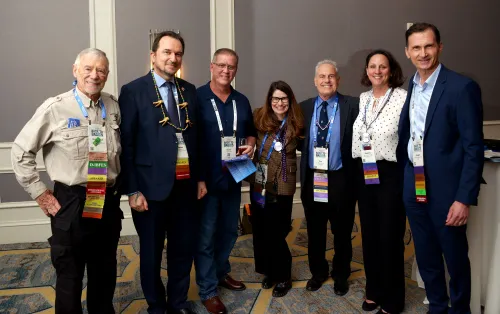
Congratulations and many thanks to our host, Yanko Kolev, and the IAFS organizing committee for convening a highly successful meeting and for the hospitality shown to the Academy members in attendance. The next meeting of the IAFS will be in Rio de Janeiro in 2029.
I also need to congratulate and thank Dragan Primorac for allowing me to participate in the 14th International Society for Applied Biological Sciences (ISABS) Meeting in Croatia in June. The meeting focused on the use of artificial intelligence in the practice of medicine and the speakers included experts in the field as well as Nobel Prize Laureates. The use of artificial intelligence in the forensic sciences is an important topic for all of us and, of course, was central to the theme for our meeting in Baltimore.
In closing, I will make one final pitch to everyone reading this to get those abstracts submitted and start making those travel plans. PLEASE COME TO ORLANDO!
The views and opinions expressed in the articles contained in the Academy News are those of the identified authors and do not necessarily reflect the official policy or position of the Academy.