Search
Explore content from JFS, ASB, the AAFS Newsfeed, and other content using the search bar or filters.
Loading...
Active Filters:
Journal of Forensic Sciences
Automated classification of ignitable liquid profiles: Comparing machine learning and rule...
In this work, two methods were developed for the automated classification of neat ignitable liquids and ignitable liquid residues. The performances of the two approaches were evaluated using laboratory‐generated gas chromatography–mass spectrometry (GC–MS) data of various types o...
FEPAC Program Events
Syracuse University Announces Forensic Science Graduate Pathways
FEPAC Program Events
The West Chester University of Pennsylvania Announces WCU FTC Open House
Journal of Forensic Sciences
Brazilian spotlight on INTERPOL's I‐Familia: Policy, practice, and international missing...
The disappearance of individuals is a global humanitarian and public security issue that requires coordinated national and international responses. INTERPOL's I‐Familia database is a global DNA database that uses kinship matching to support identification of missing persons ...
FEPAC Program Events
University of North Dakota Announces A Forensic Science Bootcamp
FEPAC Program Events
Alfred State College Announces Open House
FEPAC Program Events
West Chester University of Pennsylvania Announces Career Event Program
Annual Conference News
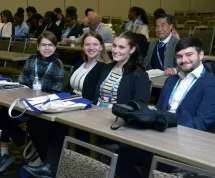
Your Forensic Science Career Starts With Connections at AAFS

Membership News
Epic Member Deals—October 2026
ASB News
ASB Newsletter – October 9, 2026
Section News | Forensic Nursing Science
FNS Section Scholarship Announcement
Annual Conference News
Don't Forget to Book Your Hotel Room!!
Section News | General
Calling for General Section Moderators
Section News | Forensic Nursing Science